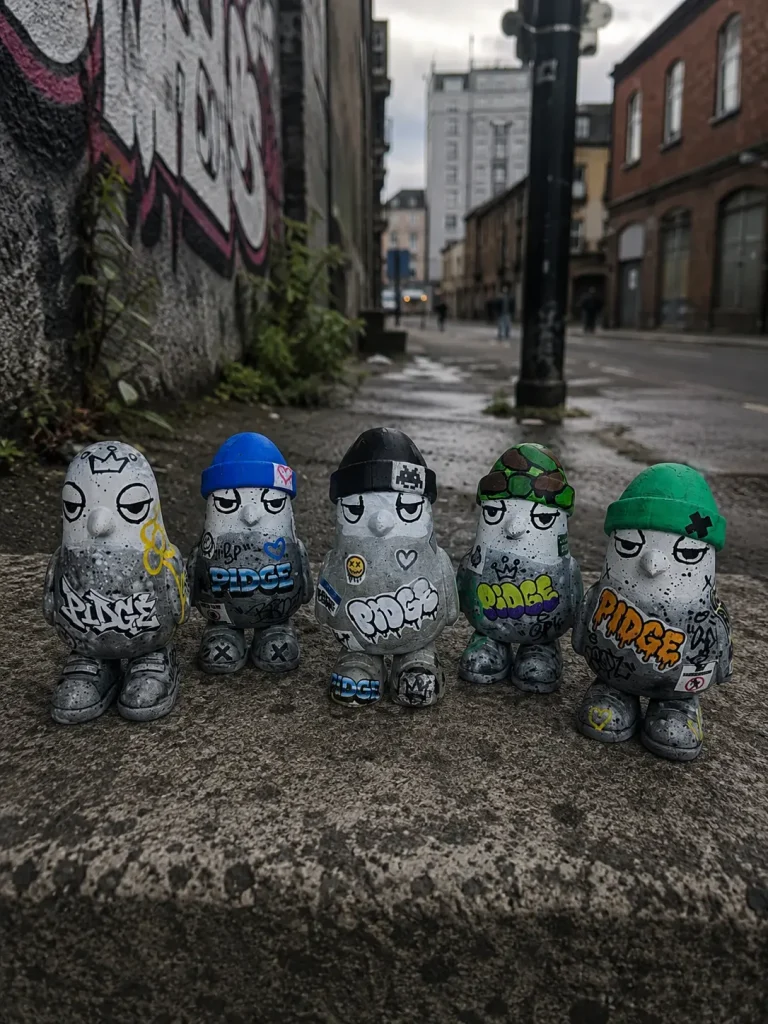
Pidge started as one of those ideas that didn’t really have a grand plan behind it.
I wanted to make a character. Something simple, physical and a little bit scruffy. Something that could exist away from a screen.
And eventually, Pidge appeared.
From an idea to an actual object
I’ve always liked making things.
A lot of my day-to-day work involves websites, design and things that ultimately exist on a screen. Personal projects give me an excuse to go in completely the opposite direction and make something physical.
Pidge is part character design, part sculpture, part street art and probably part toy.
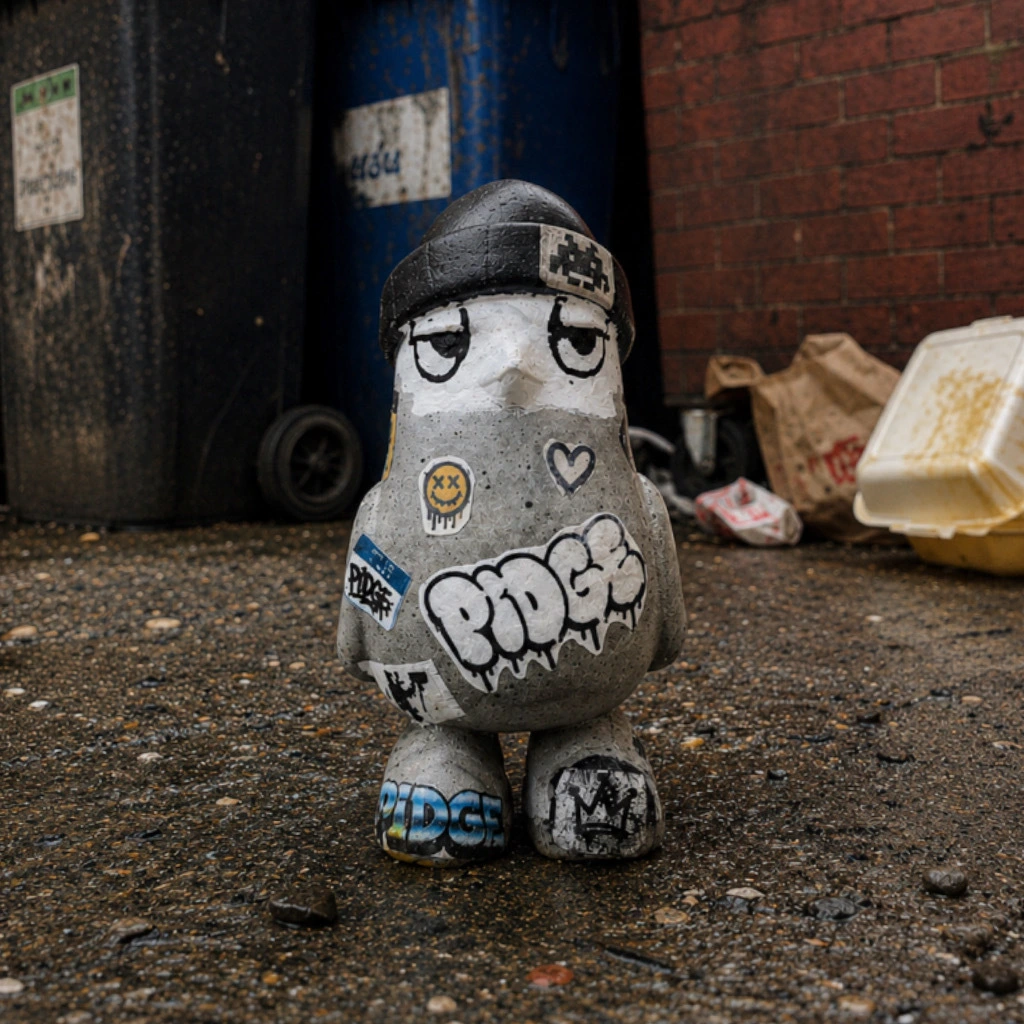
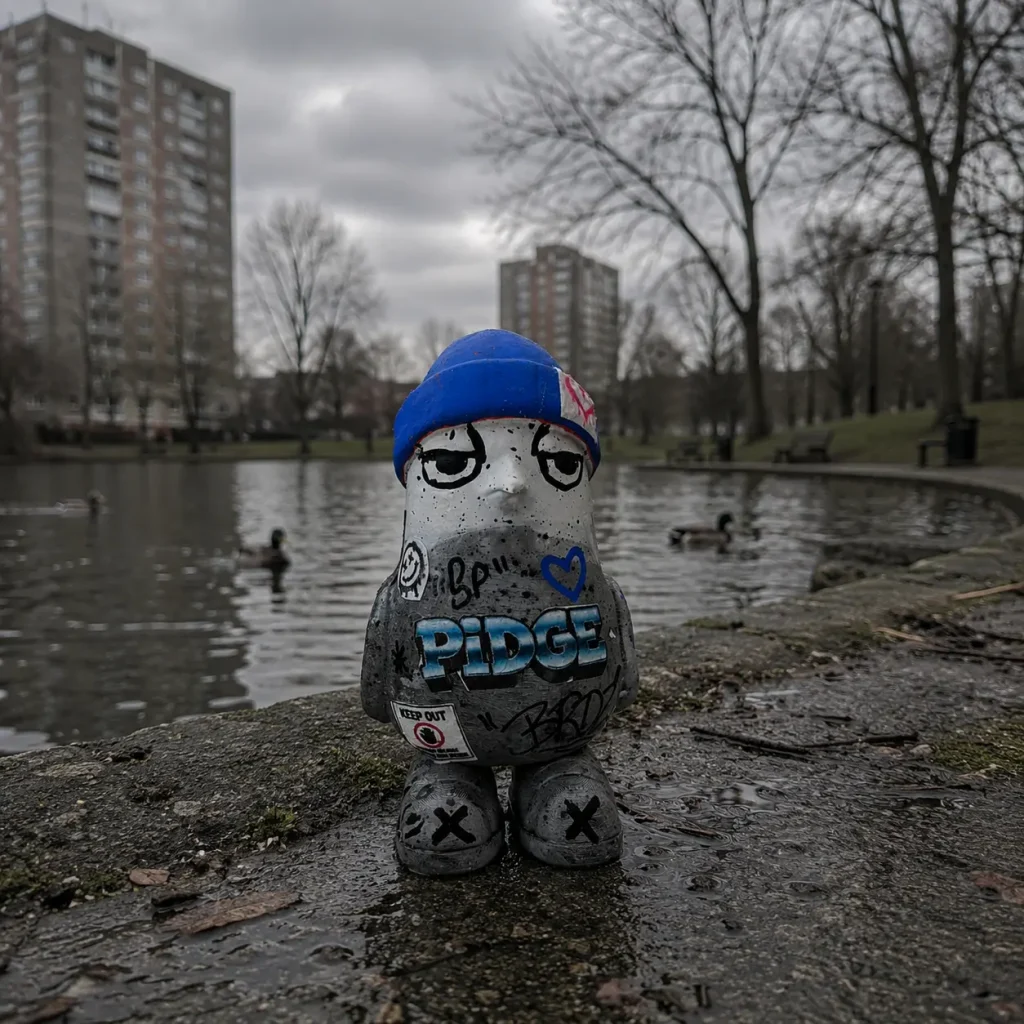
The basic shape is deliberately simple. There’s something vaguely pigeon-like about him, but he’s also just a strange little character with big feet, a blank expression and not much enthusiasm for whatever is happening around him.
That expression became quite important.
He always looks slightly unimpressed.
Making the Pidges
Rather than making a single Pidge, I wanted to be able to create variations.
The original was made as a 3D model, which then gave me a physical form I could work from. From there I made my own silicone moulds and started casting them.
That’s probably one of my favourite parts of projects like this.
There’s a process.
Design something digitally. Print it. Make a mould. Cast it. Paint it. Photograph it.
Each stage changes the thing slightly.
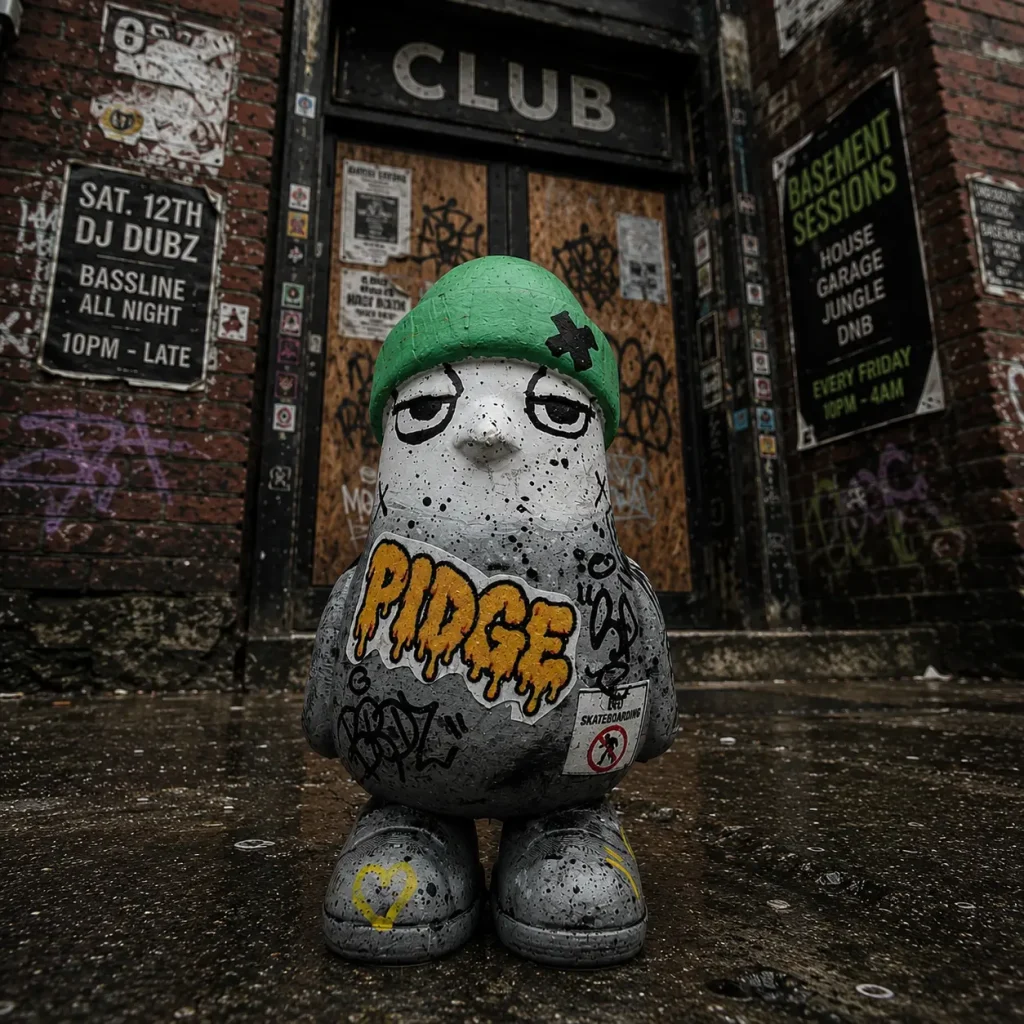
The casts aren’t supposed to be absolutely perfect either. Small marks, textures and imperfections actually help. Once they’re painted, splattered, drawn on and covered in tiny bits of graffiti, those imperfections become part of the character.
I don’t really want them to look mass-produced.
Quite the opposite.
Giving each one an identity
The basic Pidge might be the same, but each finished character is different.
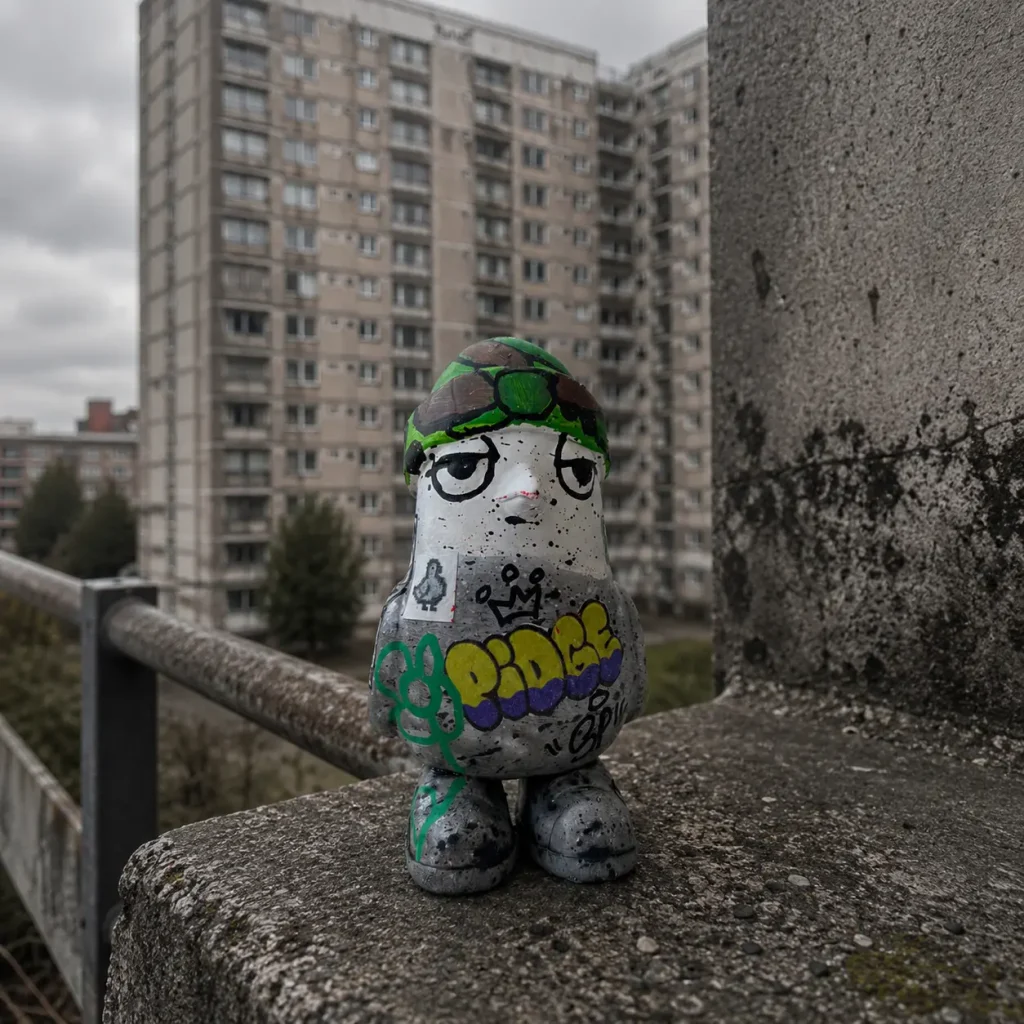
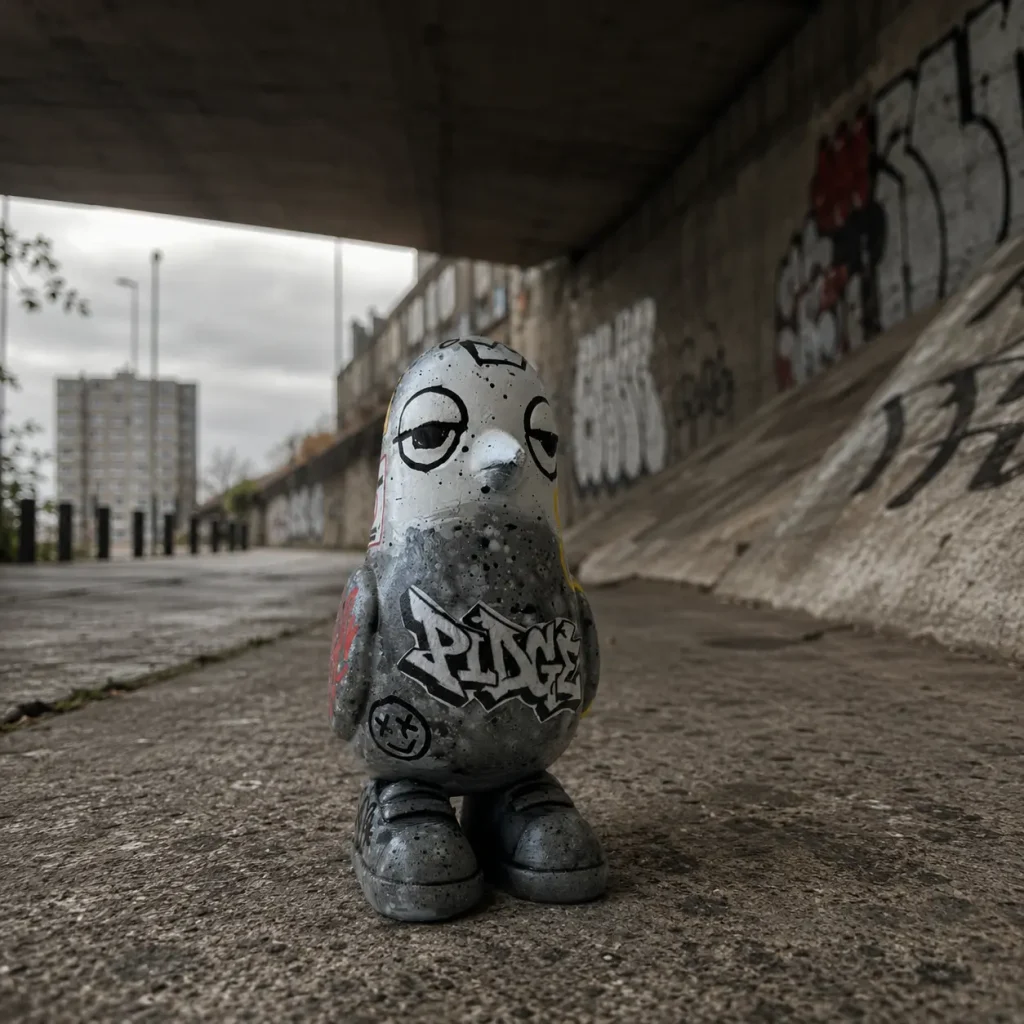
Different hats. Different colours. Different tags. Stickers. Scribbles. Paint splatters. Little references and marks.
I’ve treated the surface almost like a tiny wall somewhere in a city.
Things overlap.
Some bits are neat. Some aren’t.
New marks cover old ones.
There isn’t really a strict design system governing where everything goes. I prefer letting each one develop as I’m making it.
It means they end up feeling related without being identical.
A little Pidge crew.
Taking them outside
The project became much more interesting when I started photographing them away from home.
Instead of photographing them against a clean backdrop, I’ve been taking them into places that feel like they belong there.
Concrete.
Graffiti.
Underpasses.
Tower blocks.
Wet pavements.
Old brick buildings.
Suddenly the scale becomes slightly ambiguous.
A little cast character sitting on a concrete wall can almost look like it has always been there. Photographing them from close to ground level exaggerates that even further.
That’s become as much a part of the project as making the actual Pidges.
I’m not just making an object and documenting it.
I’m putting a character into an environment and photographing the little scene that happens as a result.
Why pigeons?
I’ve always loved pigeons.
They’re everywhere, particularly in towns and cities, but we barely notice them.
They’re scruffy, adaptable and surprisingly full of character.
They also seem appropriate for something influenced by graffiti and urban environments. A pigeon doesn’t need permission to be somewhere. It just turns up.
Pidge has ended up feeling much the same.
No real destination
I’m deliberately not trying to work out what Pidge needs to become.
It doesn’t need to become a product.
It doesn’t need a complicated story.
And it definitely doesn’t need a five-year brand strategy.
For now I like making them, experimenting with different finishes and taking them out to find places to photograph them.
That’s enough.
There will probably be more Pidges.
And they’ll probably continue looking completely unimpressed about it.