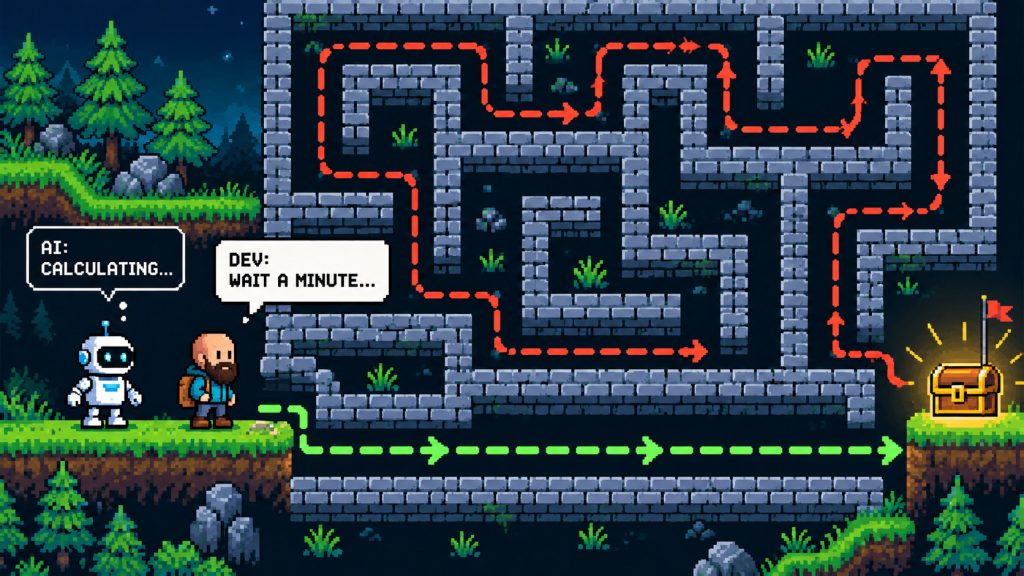
AI has become an incredibly useful problem-solving tool.
Give it an error, a piece of code or a description of something that isn’t working and it’ll happily work through possible solutions with you.
But I’ve been thinking about what happens when AI becomes the first approach to every problem.
I recently had a UI element that wasn’t behaving correctly on a particular device. I’d gone through various possible fixes with AI, but none of them really solved it.
Then I stopped looking at the suggested solutions and thought about the problem myself.
I had an idea.
It wasn’t groundbreaking or particularly clever, but it worked. More importantly, it was an approach AI hadn’t suggested.
That got me thinking about experience.
I’ve been building things for the web for a long time. Over those years you accumulate thousands of little bits of knowledge: things you’ve broken, strange browser behaviour you’ve encountered, approaches that failed and solutions that worked.
You don’t necessarily consciously recall all of that when solving a problem. Sometimes you just have a hunch worth trying.
And that’s where I have a slight concern about vibe coding.
Someone can now build surprisingly sophisticated things with relatively little development experience. That’s genuinely impressive.
But if AI is also responsible for diagnosing every problem, where does that underlying experience come from?
If you’ve never spent time debugging something yourself, getting things wrong and understanding why they went wrong, it’s much harder to recognise when AI is leading you down the wrong path.
AI can give you an enormous head start.
But there’s still a lot of value in knowing enough to occasionally say:
I’ve got another idea.