I’ve been making birbs.
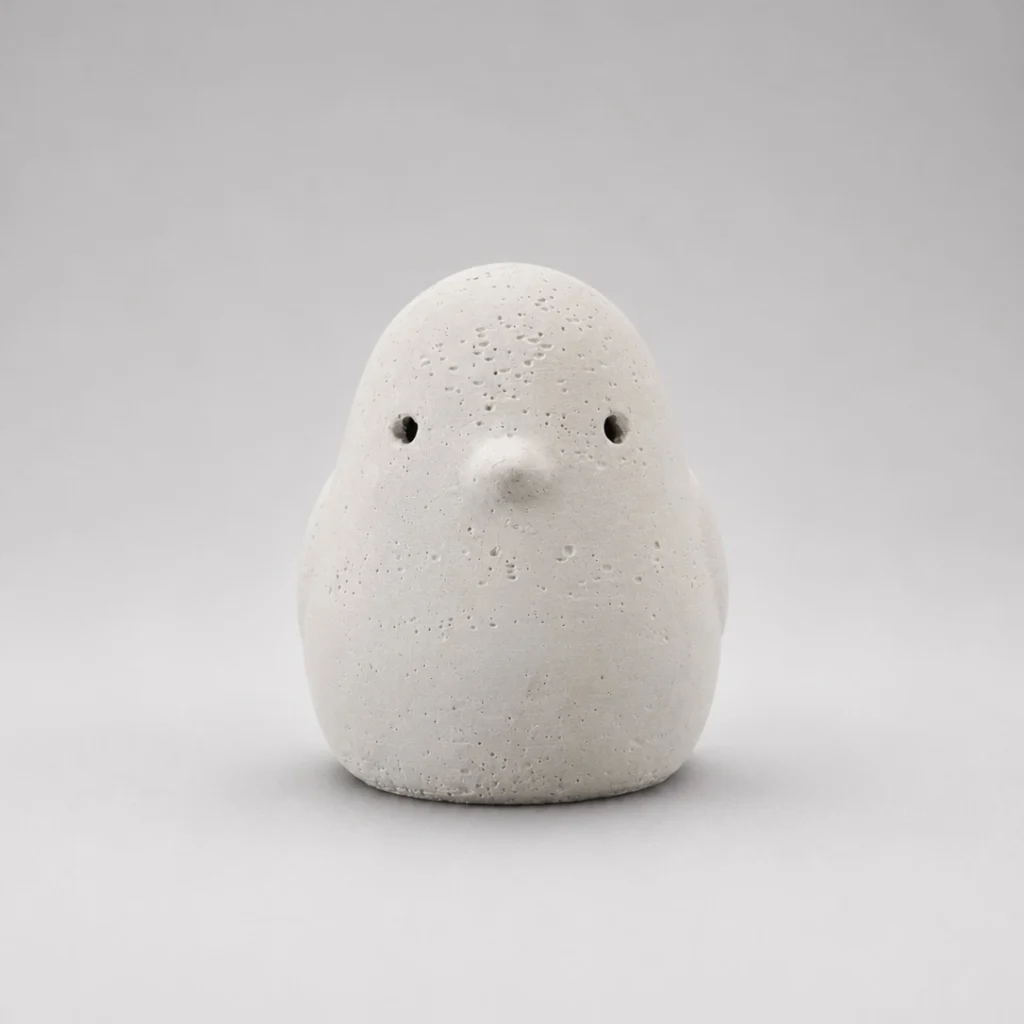
They started life digitally, as a very simple 3D model. I deliberately kept the form minimal: a rounded body, the suggestion of a beak and two eyes. Just enough information for your brain to decide that, yes, this little lump is probably a bird.
From that original model I created a 3D print, then used the print to make my own silicone mould.
That meant I could start casting them in Stonecast.
And that’s where things became much more interesting.
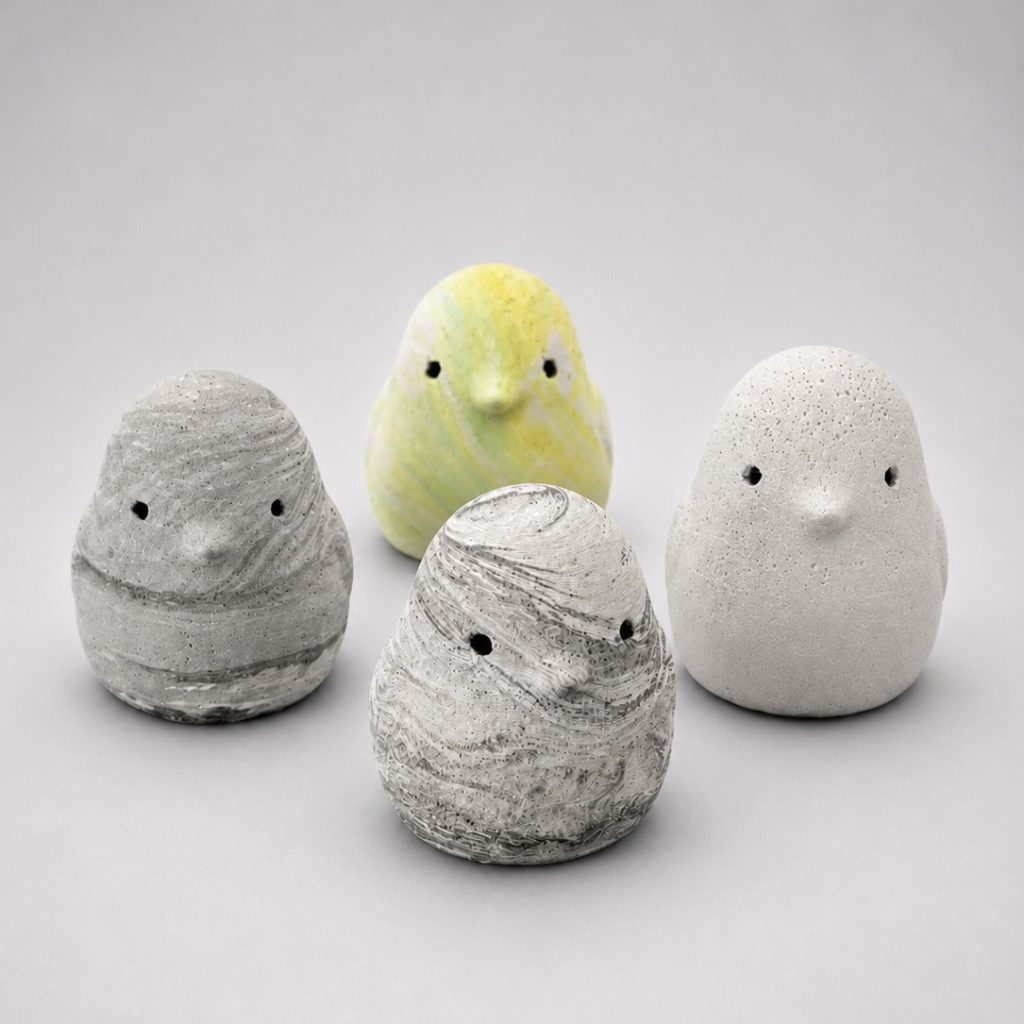
From digital to physical
A 3D model is predictable. You can duplicate it endlessly and every copy is essentially identical.
Casting doesn’t quite work like that.
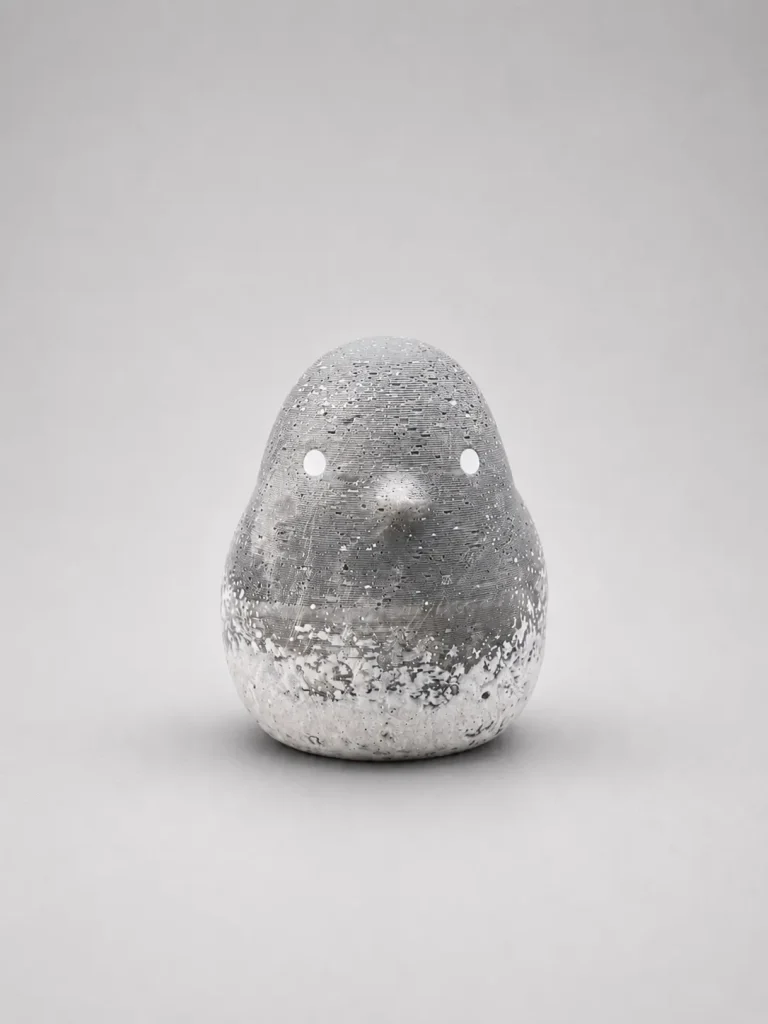
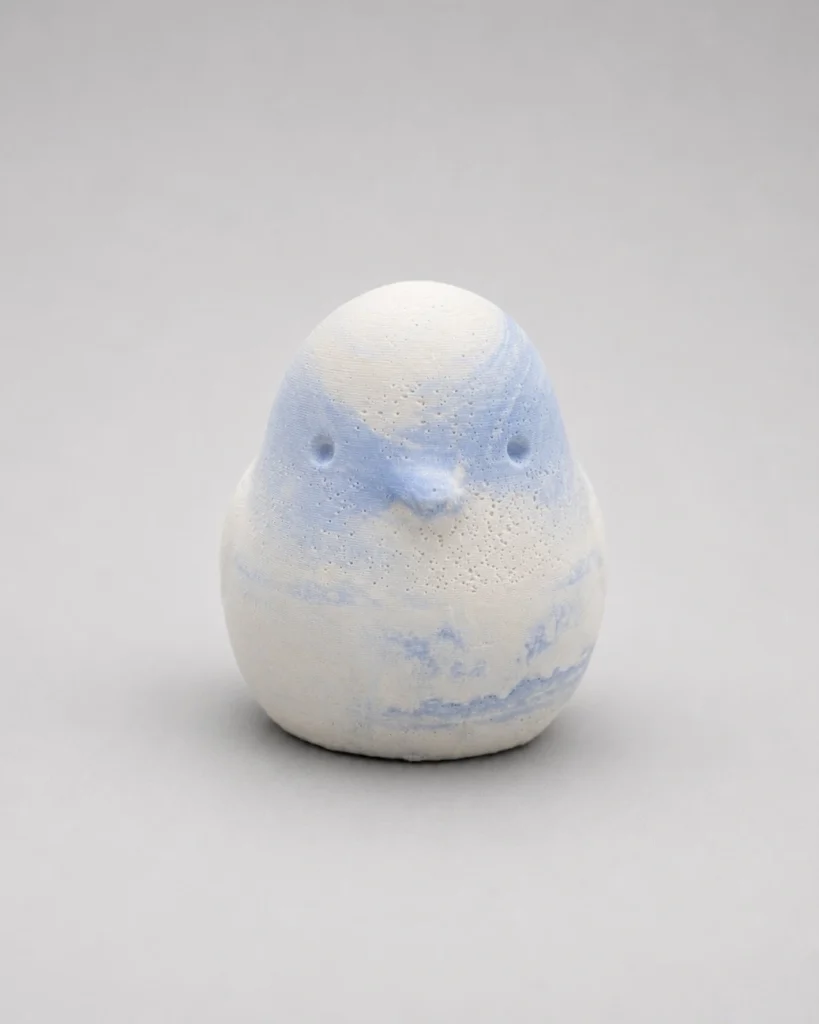
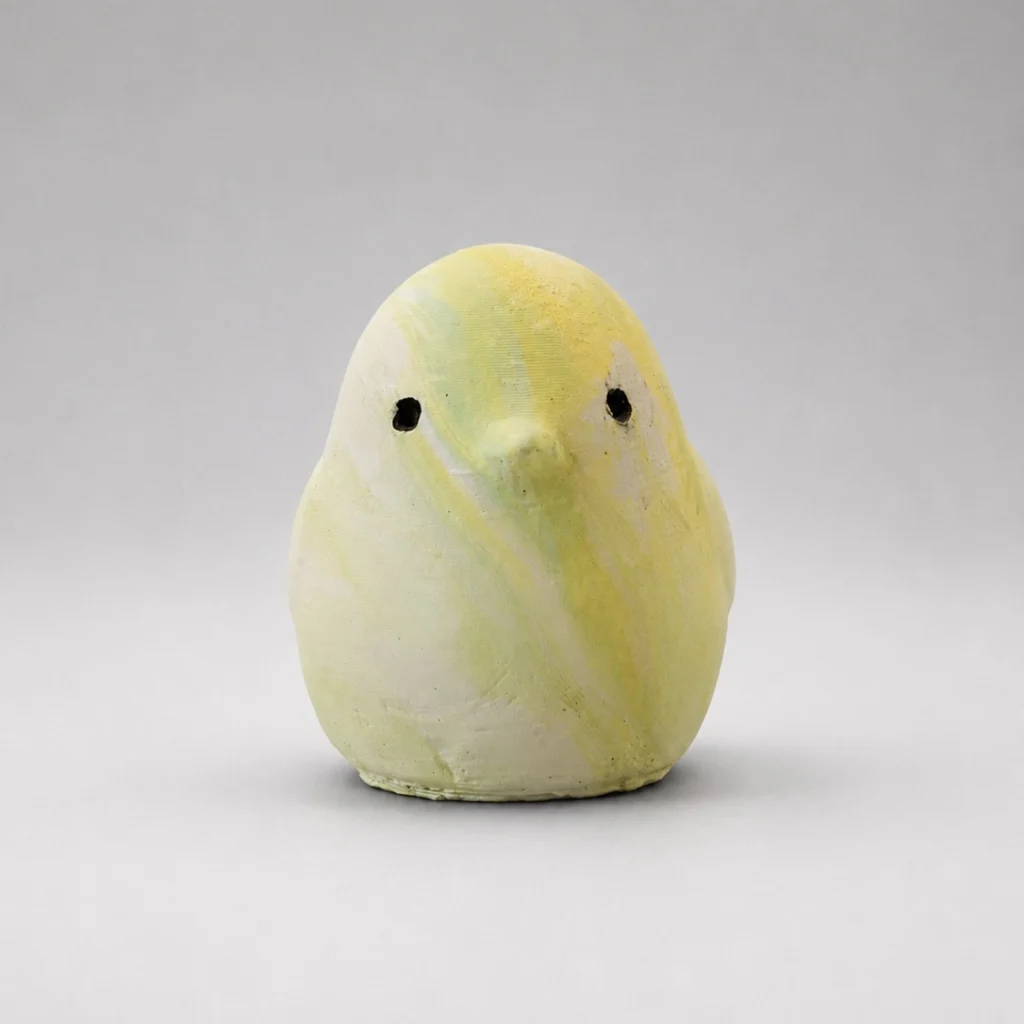
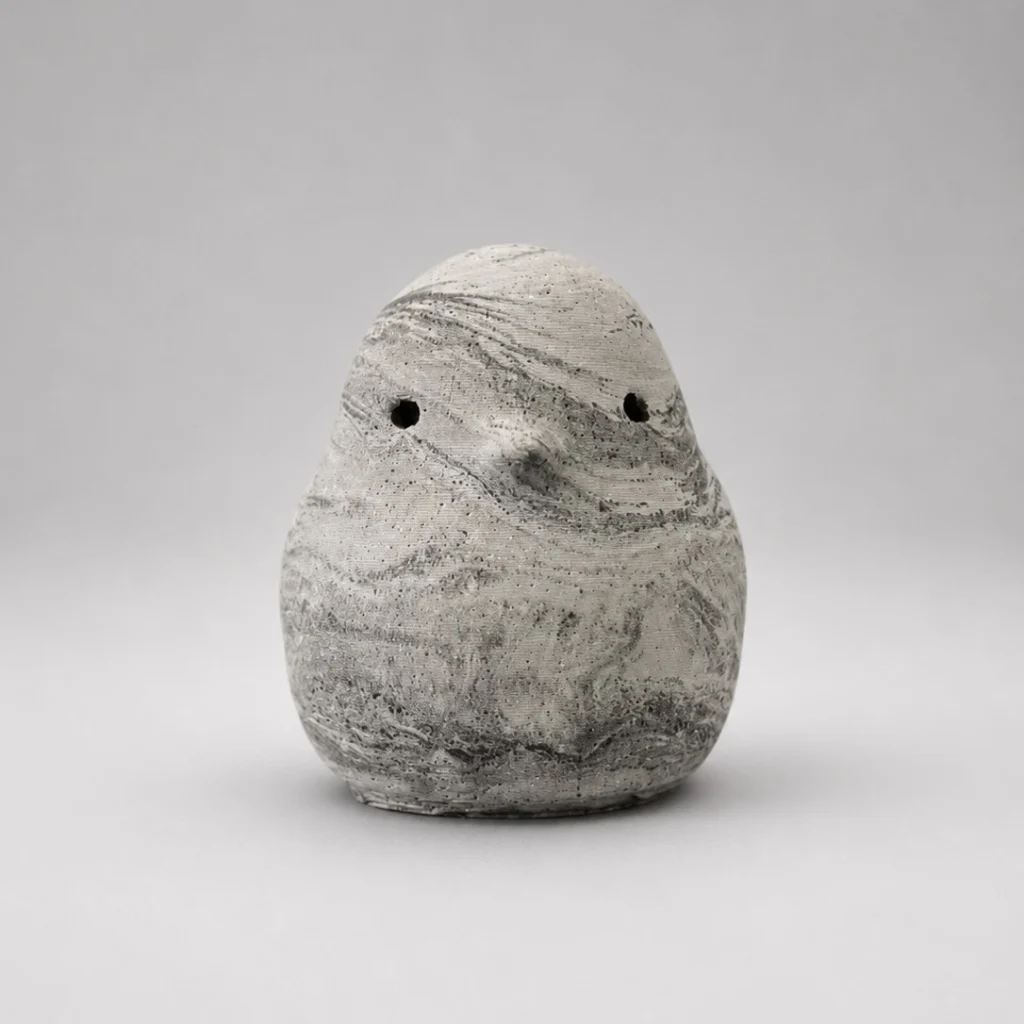
The basic form might come from the same mould, but every birb comes out with its own collection of tiny bubbles, marks, imperfections and variations in the surface.
Rather than trying to eliminate all of that, I’ve started embracing it.
The slightly rough surface of the Stonecast actually suits the simplicity of the shape. Some look almost like little carved stones rather than something that began life on a computer.
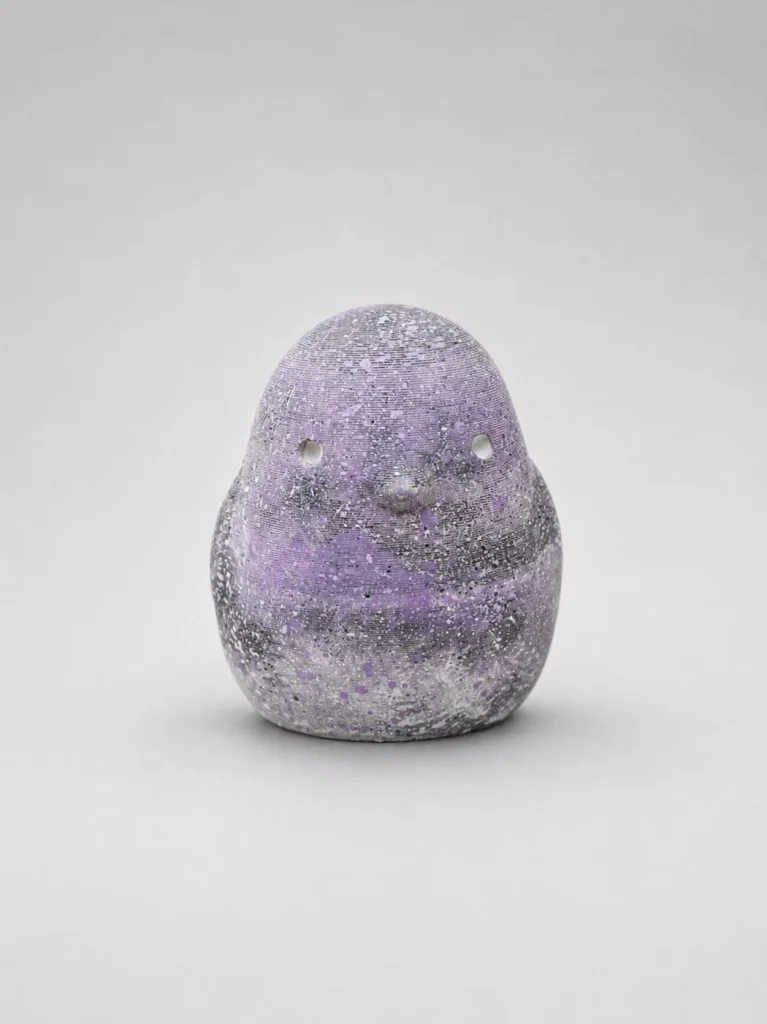
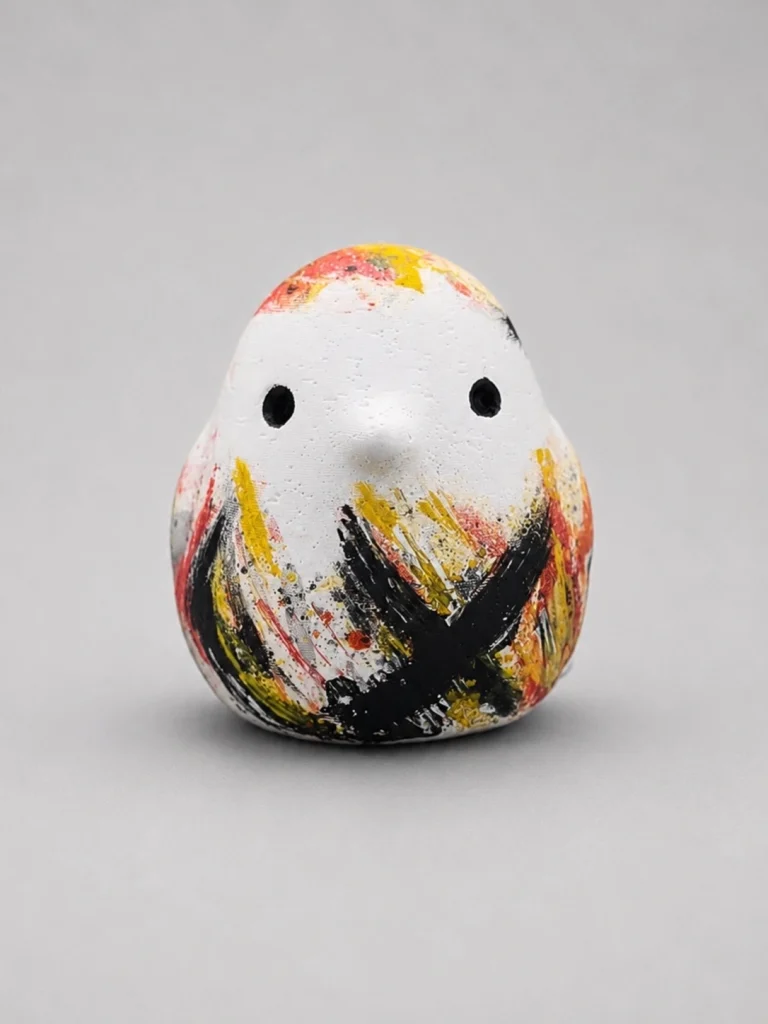
Same birb, different experiments
Once I had a repeatable form, the birb became a small three-dimensional canvas.
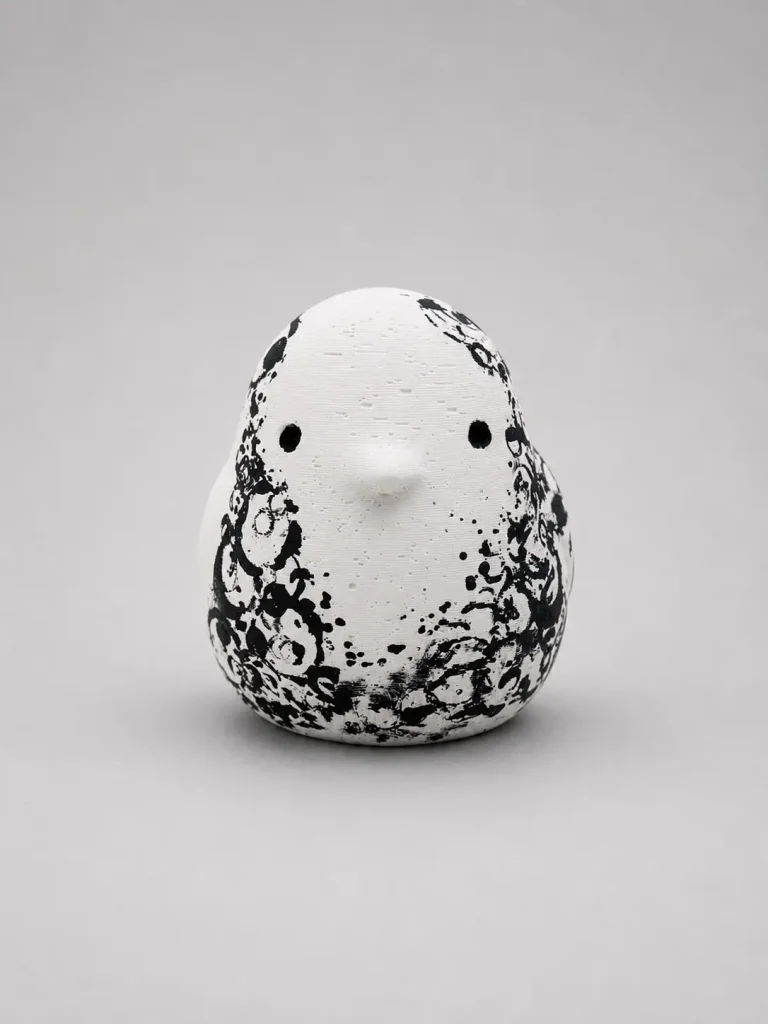
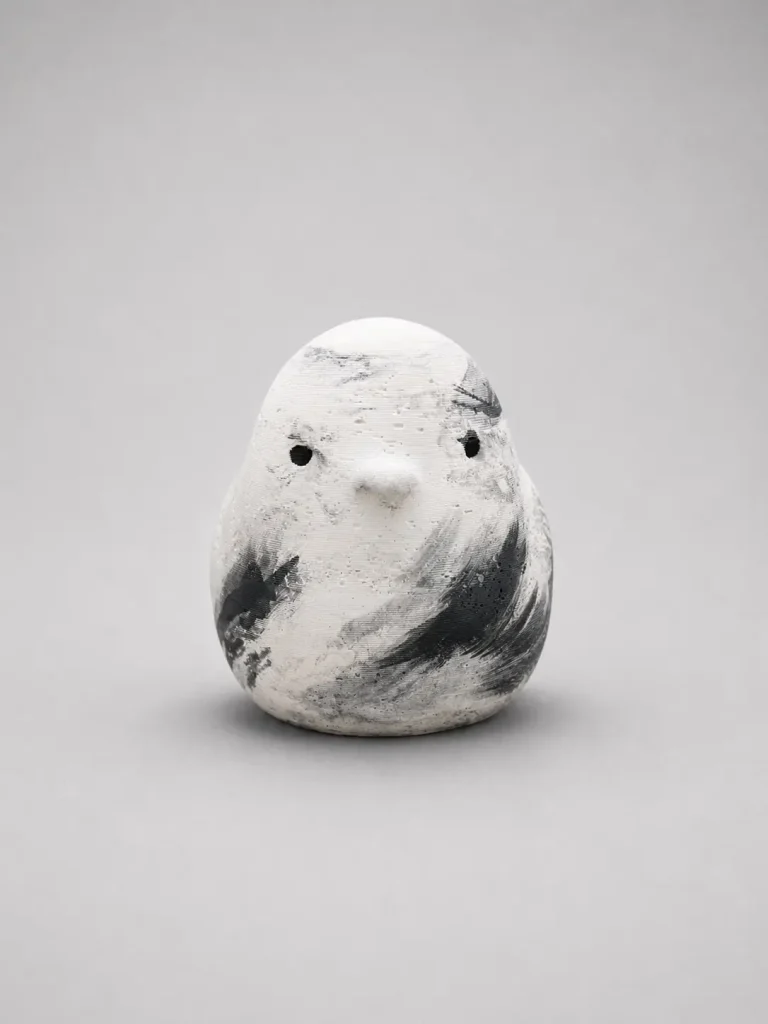
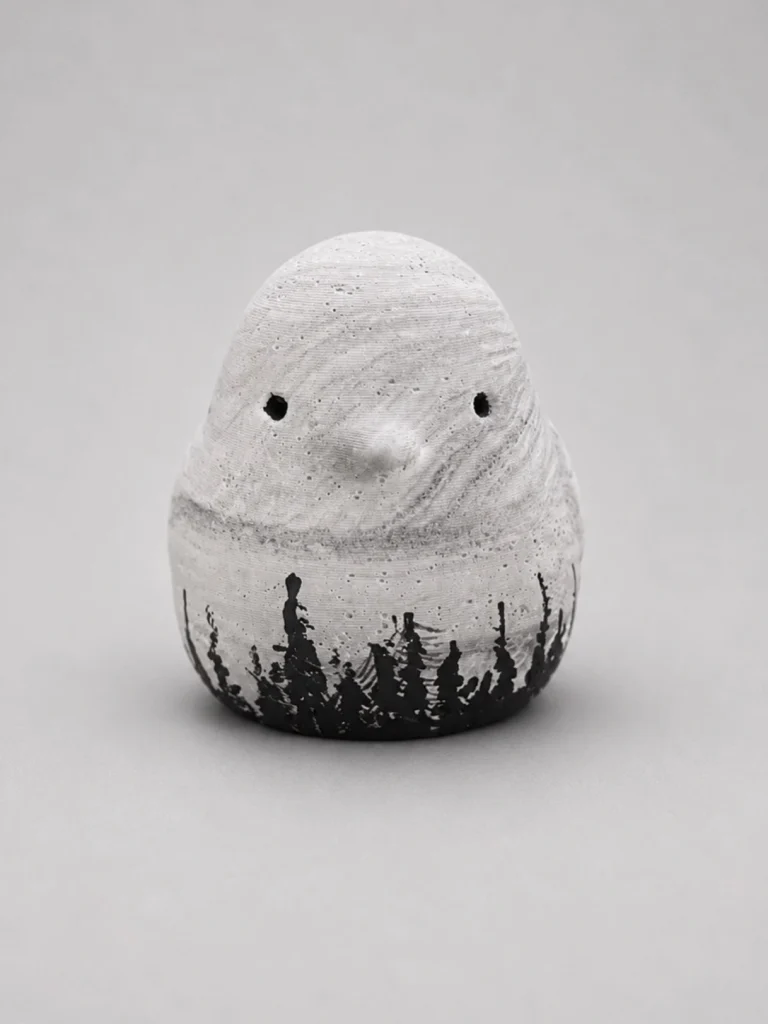
I’ve tried leaving them completely white, adding washes of colour, working into the surface with black, creating loose landscapes and using much more expressive painted marks.
Some experiments are very restrained.
Others definitely aren’t.
What I like is that the underlying object never changes. Two eyes, a tiny beak and a vaguely bird-shaped lump remain constant while everything happening on the surface can be completely different.
There is something quite liberating about that.
I’m not starting with a blank canvas each time. The decision about what I’m making has already been made.
The question becomes:
What happens to this birb?
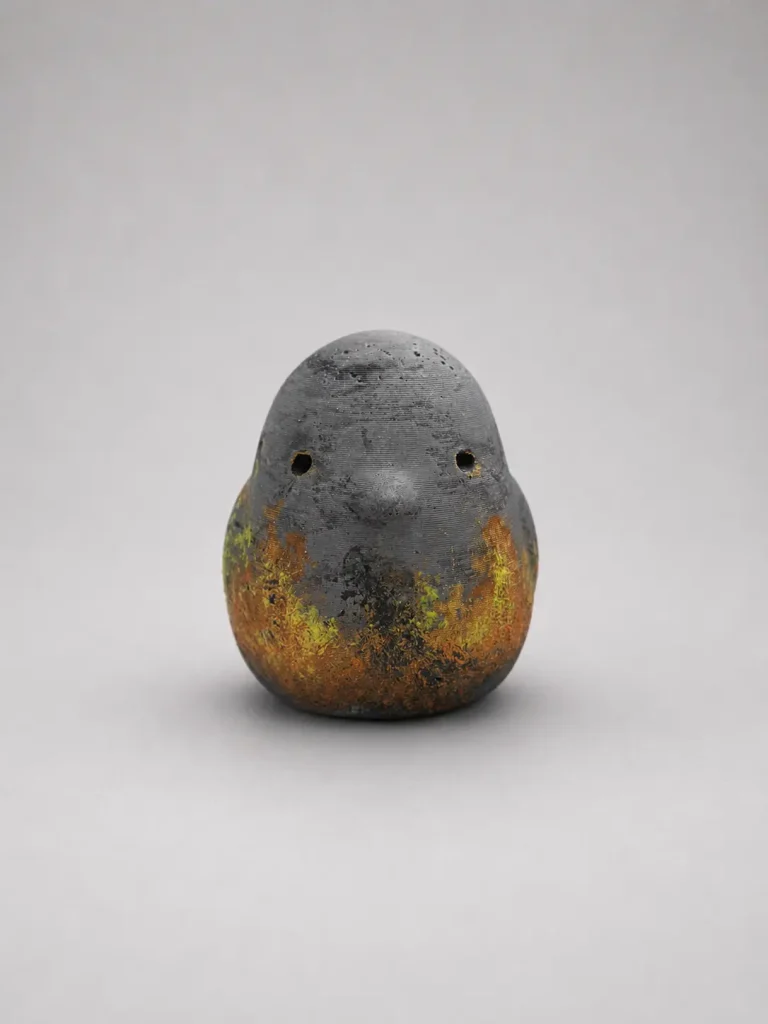
Imperfect multiples
I’ve become particularly interested in the idea of multiples that aren’t really multiples.
The 3D print gives me an original.
The silicone mould gives me repetition.
The casting introduces variation.
Painting makes each one unique again.
It’s a strange little journey from something completely digital and reproducible to something physical and individual.
And I think that’s probably why I’ve enjoyed making them so much.
They combine quite a few things I’m interested in: 3D design, making, materials, repetition, randomness and experimentation.
They’re also just quite nice little objects to have sitting around.
More birbs
I don’t really have a grand plan for them.
For now I’m happy treating each cast as another experiment: different materials, pigments, textures, painting techniques and probably a few ideas that won’t work at all.
The mould gives me permission to experiment because I can always cast another one.
Same birb.
Different outcome.
And there will almost certainly be more of them.